Megawatt Charging System (MCS)
The Challenge of Electrifying Heavy Freight
While a 350kW ultra-fast charger is perfectly adequate to recharge a consumer passenger car with a 80kWh battery in under 20 minutes, it falls drastically short for commercial transport. Class 8 heavy-duty trucks, electric ferries, and regional aviation require battery packs scaling from 500kWh to well over 1,000kWh. Using existing passenger charging standards, fully recharging a heavy-duty freight truck would take several hours, utterly disrupting highly optimized logistics schedules and driver rest regulations.
To make heavy-duty electric transport economically viable, the industry recognized the need for a unified standard capable of delivering over 1,000 kilowatts (1 Megawatt) of power. The result is the Megawatt Charging System (MCS).
MCS Technical Specifications
The Megawatt Charging System represents a massive leap in power electronics and connector design. Standardized by global industry coalitions, the MCS connector is distinct from passenger vehicle connectors (such as CCS or NACS) due to the sheer volume of energy it must handle.
| Specification | Standard Fast Charging (CCS) | Megawatt Charging (MCS) |
|---|---|---|
| Maximum Voltage | Up to 1,000V DC | Up to 1,250V DC |
| Maximum Current | 500 Amperes | 3,000 Amperes |
| Maximum Power Output | ~500 kW | 3,750 kW (3.75 MW) |
Operating at up to 3,000 amps generates immense thermal loads. Consequently, MCS relies heavily on advanced active liquid cooling, not just within the charging cable and connector, but integrated directly into the vehicle's receiving port to extract heat from the massive copper contact pins.
Grid Impact and Infrastructure Deployment
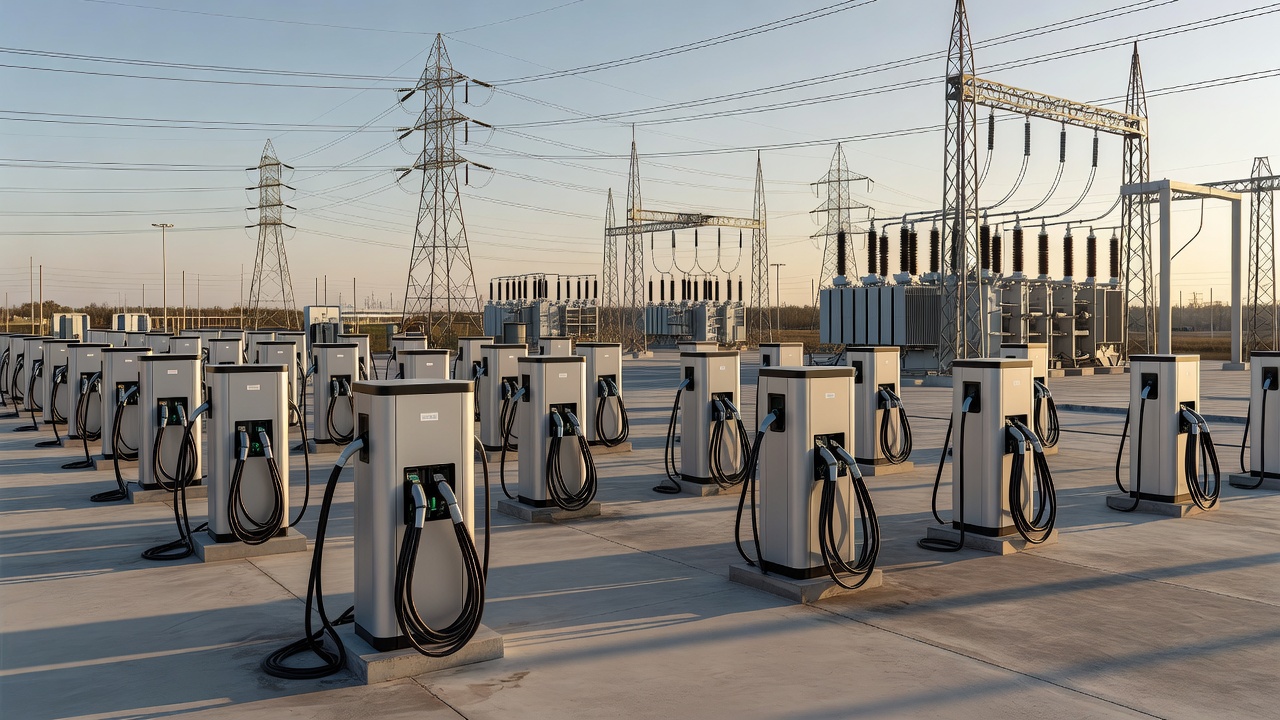
Deploying MCS stations presents unprecedented challenges for local electrical grids. A single MCS charging plaza with five truck stalls could simultaneously demand 10 to 15 megawatts of power—equivalent to the electrical load of a small town. This requires dedicated medium-voltage grid connections, massive onsite transformers, and significant coordination with utility companies.
To mitigate the grid impact and avoid exorbitant demand charges, many early MCS deployments are co-located with substantial battery energy storage systems (BESS) and onsite renewable generation. These buffer batteries slowly trickle-charge from the grid and discharge rapidly into the trucks, acting as a crucial shock absorber for the local utility infrastructure.
The Road Ahead
The successful rollout of the Megawatt Charging System is arguably the most critical dependency for decarbonizing the logistics and supply chain sectors. Standardizing the connector ensures interoperability across different truck manufacturers and charging networks, preventing the fragmentation that initially plagued the passenger EV market. As the first public MCS corridors are activated, we are moving closer to a future where a 40-ton electric truck can gain hundreds of miles of range during a driver's mandated 45-minute rest break.