800V Architecture in EV Charging
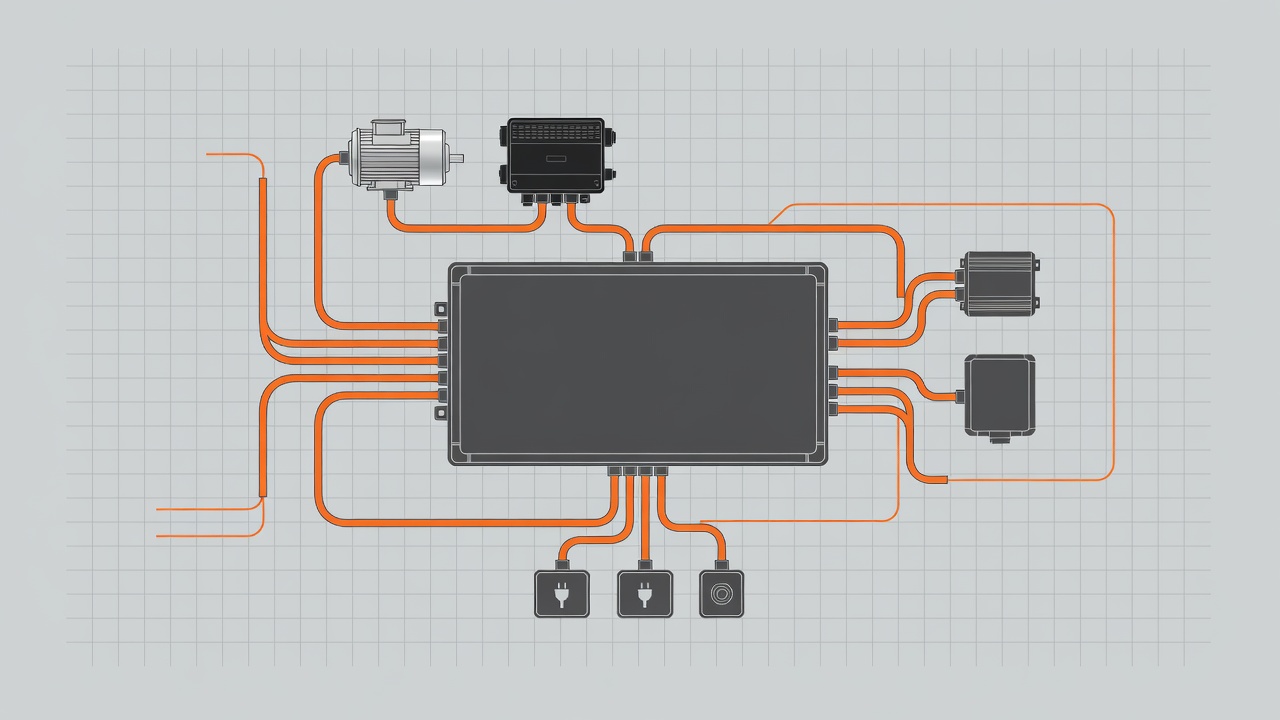
The Shift from 400V to 800V
For the first decade of modern electric mobility, 400-volt (400V) systems were the undisputed industry standard. They offered a balanced compromise between component cost, safety requirements, and performance. However, as the demand for faster charging and longer ranges intensified, the physical limitations of 400V systems became apparent. To push more power into a battery at 400 volts, you must increase the amperage (current). Increased current inherently leads to increased heat generation due to electrical resistance, requiring thicker, heavier cables and more aggressive thermal management systems.
The introduction of 800-volt (800V) architecture represents a fundamental paradigm shift. By doubling the operating voltage, engineers can deliver the same amount of total power (wattage) using half the current. This simple application of Joule's first law and Ohm's law unlocks profound benefits across the entire vehicle and charging network ecosystem.
Physics at the Charging Station
At an ultra-fast charging station, the primary bottleneck is often the charging cable itself. A standard 400V system attempting to draw 250 kilowatts (kW) requires a current of over 600 amperes. Sustaining such a massive current generates extreme heat. Conversely, an 800V system can draw that same 250kW at around 310 amperes. This dramatic reduction in current drastically lowers the thermal load on the charging station's internal electronics, the physical cable connecting to the vehicle, and the vehicle's onboard power distribution systems.
Key Advantages of High-Voltage Charging
- Reduced Charging Times: 800V platforms can comfortably sustain charging rates of 250kW to 350kW, allowing vehicles to replenish from 10% to 80% state of charge in roughly 15 to 18 minutes.
- Thinner, Lighter Wiring: Lower current requirements mean the high-voltage cabling throughout the vehicle can have a smaller cross-sectional area. This reduces the total weight of the vehicle's wiring harness, improving overall efficiency and range.
- Thermal Efficiency: With less heat generated during both rapid charging and high-performance driving, the cooling system does not need to work as hard, further preserving energy for propulsion.
- Motor Efficiency: High-voltage inverters, often utilizing silicon carbide (SiC) semiconductors, can switch faster and more efficiently at 800V, providing better performance and less energy loss at highway speeds.
Infrastructure Compatibility and Challenges
While the benefits are clear, the transition to 800V architecture requires parallel upgrades in the public charging infrastructure. An 800V vehicle plugging into an older 400V DC fast charger faces a challenge: the charger cannot naturally output the required voltage. To solve this, automakers use onboard DC-to-DC converters (or utilize the motor inverter hardware in clever ways) to boost the 400V station supply up to the 800V needed by the battery pack. However, this conversion process is often power-limited, meaning the vehicle might charge slower on a 400V station than a native 400V vehicle would.
Modern ultra-fast charging hubs are now being deployed with native 800V to 1000V capabilities. These stations dynamically adjust their voltage output based on the vehicle's request, ensuring that both legacy 400V platforms and modern 800V architectures receive the maximum power their battery management systems (BMS) can safely accept.
Future Outlook
The trajectory of the electric vehicle market suggests that 800V will become the dominant standard for mid-to-high-tier passenger vehicles by the end of the decade. Component costs for 800V systems—particularly the specialized silicon carbide inverters and high-voltage contactors—are falling as economies of scale take effect. As battery capacities grow to support ranges in excess of 400 miles, the necessity of 800V architecture to keep charging stops under 20 minutes becomes absolute. The synergistic evolution of these high-voltage vehicles and the multi-megawatt charging networks that support them is the cornerstone of next-generation electric transport.