Battery-Buffered Ultra-Fast Chargers
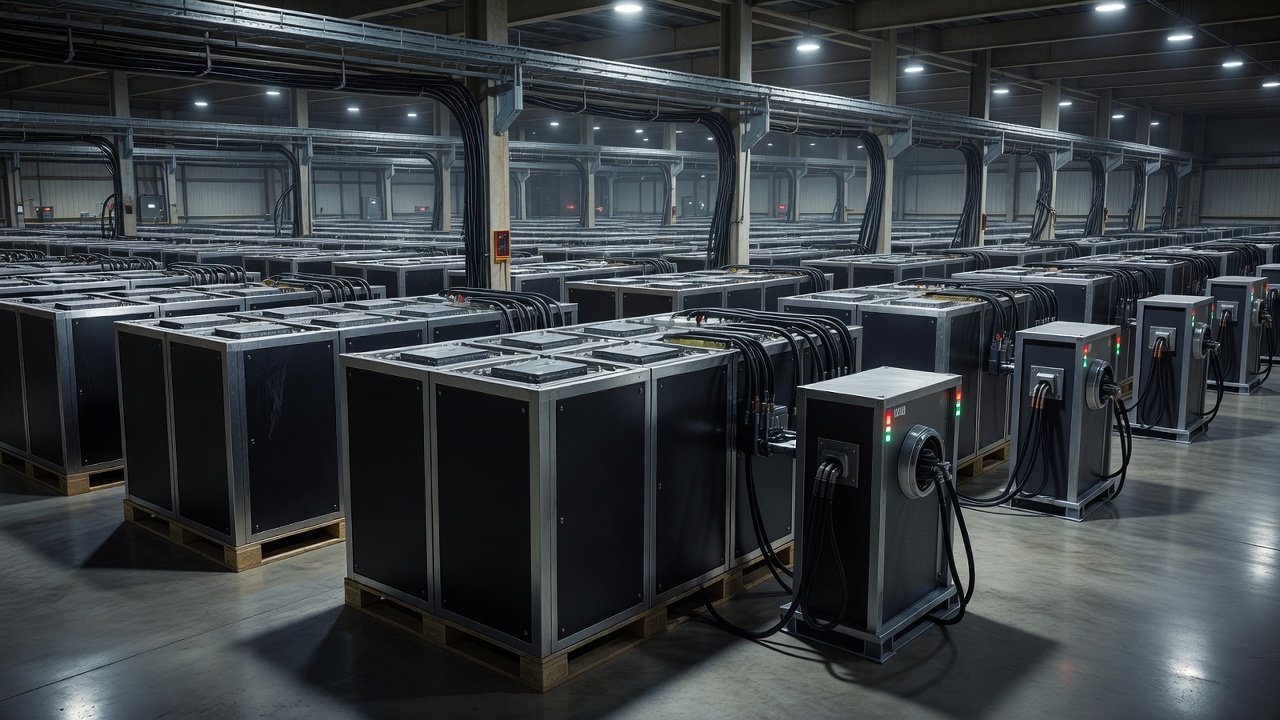
The Grid Capacity Bottleneck
One of the primary hurdles in expanding ultra-fast charging networks is local electrical grid capacity. Installing a bank of four 350kW chargers requires a grid connection capable of delivering over 1.4 megawatts of peak power. In many suburban, rural, or older urban locations, the existing utility infrastructure simply cannot support this load without massive, expensive, and time-consuming upgrades to local transformers and substations. Obtaining utility permits and completing these upgrades can delay site activation by months or even years.
Battery-buffered charging technology elegantly bypasses this bottleneck. By integrating substantial lithium-ion battery storage directly into the charging station architecture, operators can deploy ultra-fast charging capabilities in locations with severely limited grid connections.
How Battery Buffering Works
A battery-buffered charging station typically consists of a large, stationary battery pack (often ranging from 150kWh to 500kWh) and sophisticated power management electronics. The system operates on a simple but highly effective principle:
- Trickle Charging: The station connects to the grid using a standard, low-power connection—sometimes as low as 30kW to 50kW. Over hours or overnight, it draws steady, low-impact power from the grid to fill its internal battery.
- Rapid Discharge: When an electric vehicle arrives, the station dynamically pulls energy from its internal battery to deliver ultra-fast charging speeds (up to 350kW) directly to the vehicle.
- Simultaneous Operation: The station continuously manages the energy flow, blending whatever grid power is available with the internal battery's output to maximize the charge rate for the consumer.
Peak Shaving and Operational Economics
Beyond bypassing infrastructure limits, battery buffering offers significant economic advantages for charging network operators through a mechanism known as "peak shaving." Commercial electricity rates frequently include severe "demand charges"—fees based on the absolute highest peak of power drawn during a billing cycle, even if that peak lasted only 15 minutes.
For a traditional, grid-tied fast charger, a single session delivering 350kW could result in thousands of dollars in monthly demand charges, rendering the station unprofitable. Battery-buffered systems flatten this load profile. Because the grid connection is throttled to a low, consistent draw, demand charges are virtually eliminated. The station buys energy slowly when it is cheap and dispenses it rapidly when requested, drastically improving the underlying unit economics of the charging site.
Flexibility and Future Deployments
Battery-buffered stations are often designed as modular, self-contained units. Because they do not require high-voltage utility trenching or specialized heavy-duty transformers, they can be installed with relative ease in grocery store parking lots, standard fuel stations, and remote highway rest stops. As battery chemistries continue to improve and costs decrease—often utilizing second-life batteries retired from electric vehicles—battery-buffered technology will play an increasingly vital role in democratizing access to ultra-fast EV charging across all geographical boundaries.